 Image 1 of 1
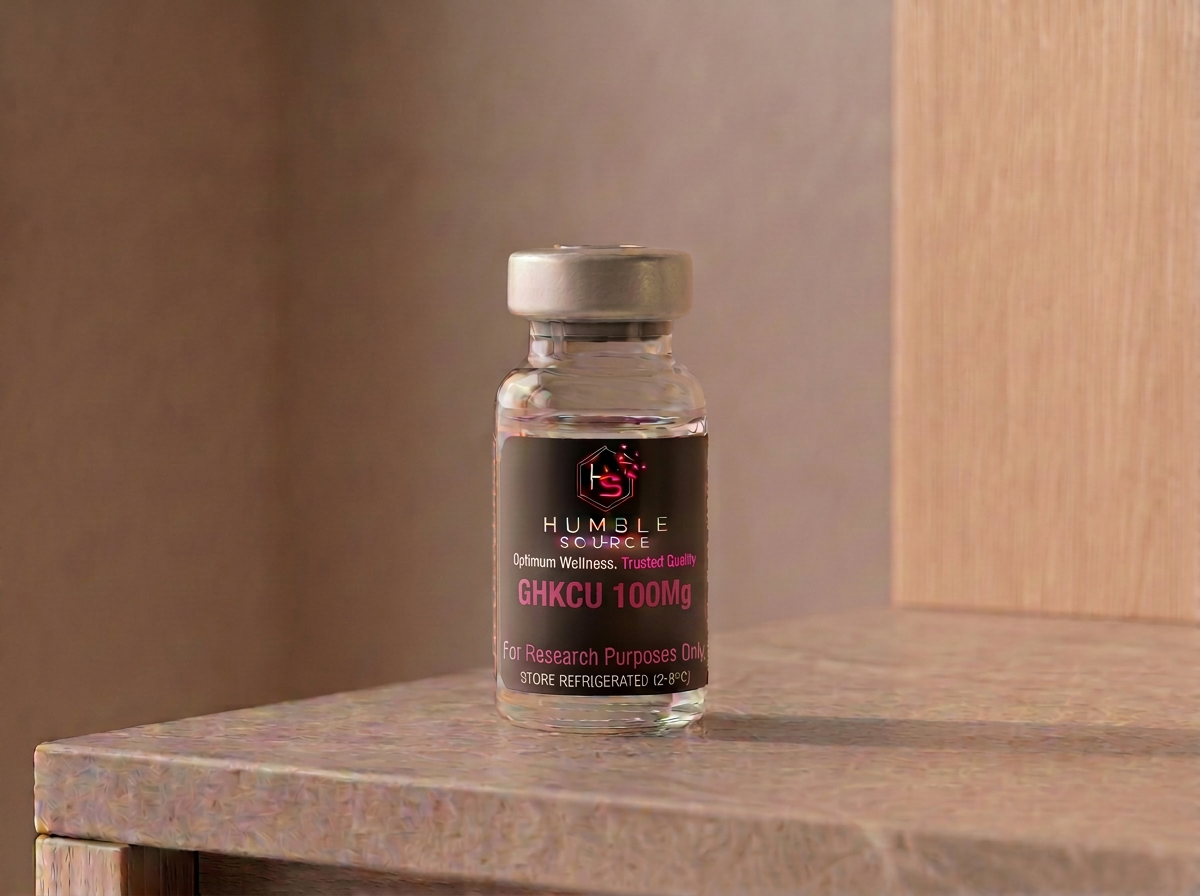
GHK-Cu (glycyl-L-histidyl-L-lysine copper complex) is a naturally occurring copper-binding peptide that has been studied for its potential role in skin health, tissue repair, and cellular signaling.
GHK-Cu is being researched for its effects on processes involved in collagen production, extracellular matrix remodeling, inflammation, and tissue repair.
GHK-Cu is a copper peptide consisting of the naturally occurring peptide GHK bound to copper.
Research suggests that GHK-Cu may play a role in biological processes associated with:
Collagen and extracellular matrix support
Skin structure and elasticity
Tissue repair and remodeling
Cellular signaling
Healthy skin appearance
Wound-healing processes
Human research remains limited, and much of the evidence comes from small studies, laboratory research, or topical applications. Current evidence for clinical benefits remains low-certainty.
GHK-Cu (glycyl-L-histidyl-L-lysine copper complex) is a naturally occurring copper-binding peptide that has been studied for its potential role in skin health, tissue repair, and cellular signaling.
GHK-Cu is being researched for its effects on processes involved in collagen production, extracellular matrix remodeling, inflammation, and tissue repair.
GHK-Cu is a copper peptide consisting of the naturally occurring peptide GHK bound to copper.
Research suggests that GHK-Cu may play a role in biological processes associated with:
Collagen and extracellular matrix support
Skin structure and elasticity
Tissue repair and remodeling
Cellular signaling
Healthy skin appearance
Wound-healing processes
Human research remains limited, and much of the evidence comes from small studies, laboratory research, or topical applications. Current evidence for clinical benefits remains low-certainty.